Physical Address
304 North Cardinal St.
Dorchester Center, MA 02124
Physical Address
304 North Cardinal St.
Dorchester Center, MA 02124

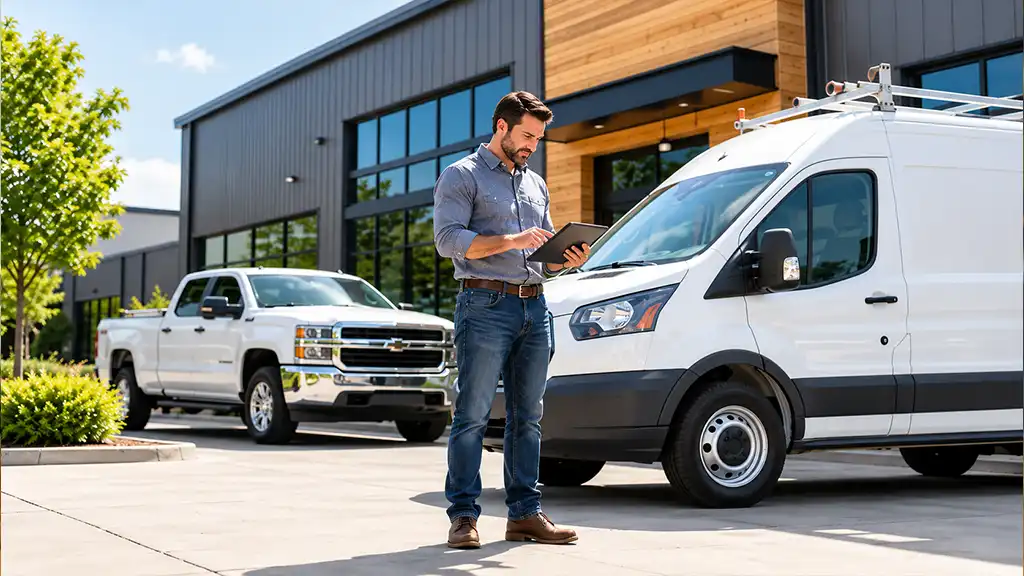
For many small businesses, vehicles are an essential part of daily operations—and a significant source of financial exposure. Whether a company relies on a single sedan for client visits, a service van, a pickup truck, or several delivery vehicles, time spent on public roads creates risks that personal auto insurance may not be designed to handle.
Commercial auto insurance premiums can vary widely, even among businesses with seemingly similar vehicles. Insurers consider numerous factors when calculating a quote, including the driving records of employees, annual mileage, business operations, location, coverage limits, prior claims, vehicle value, and where the vehicles are kept when they are not being used.
That is why asking only for the “average” commercial auto insurance cost can be misleading. A more useful approach is to identify the factors affecting your particular premium and determine which ones can be managed. Understanding how insurers evaluate business auto risks can make it easier to compare coverage without sacrificing protection simply to obtain a lower price.
Current small-business insurance data offers a general benchmark, although individual rates can be very different. Insureon reports that its small-business customers pay an average of approximately $245 per month for commercial auto insurance, which works out to about $2,942 per year.
The range in that same customer data is much broader: annual premiums can fall below $375 or exceed $16,000. Such a wide spread demonstrates why an industry average should be treated as a reference rather than an expected price for every business.
About 40% of Insureon’s small-business customers pay less than $200 per month. Companies using heavier vehicles, traveling greater distances, operating in higher-risk industries, or covering multiple drivers may face substantially higher premiums.
Commercial auto insurers are essentially pricing expected risk. They look at both the likelihood that a claim could occur and the potential financial severity of that claim.
A consultant who occasionally drives one passenger vehicle to meet clients creates a different insurance exposure from a contractor whose employees operate several trucks between job sites every day.
For that reason, comparing two premiums without examining the policies behind them can produce an inaccurate picture. A $150 monthly policy and a $300 monthly policy may have different liability limits, deductibles, physical-damage protection, driver requirements, and endorsements.
The lower price does not tell you whether the two policies actually provide comparable protection.
The type of vehicle used for business is a major consideration in commercial auto underwriting. A small passenger sedan presents different risks from a heavy-duty pickup, specialized service van, box truck, trailer, or other commercial vehicle.
The vehicle’s value can matter too. Newer vehicles often contain costly electronics, sensors, cameras, specialized lighting, and other components that can make repairs more expensive after an accident.
The Insurance Information Institute has highlighted ongoing pressures involving vehicle and parts replacement costs. As a result, the financial effect of choosing an expensive work vehicle can extend beyond its purchase price or financing payment. The vehicle may also contribute to a higher insurance expense.
Insurers may evaluate the records of employees who are permitted to operate company vehicles. Accidents, serious traffic violations, licensing issues, and repeated incidents can make an account appear riskier.
For a small business, establishing a driver-screening process can therefore be useful from both a safety and insurance perspective. Before routinely assigning a company vehicle to an employee, an owner can verify licensing and, where legally appropriate, review motor vehicle records.
Periodic checks can also reveal changes in a driver’s record before those changes contribute to a claim or become an issue during policy renewal.
Commercial auto pricing is influenced by geography. Rates can differ substantially from one state or local market to another because insurers consider factors such as traffic levels, accident frequency, repair costs, medical expenses, theft, weather-related risks, legal conditions, and the prevalence of uninsured motorists.
Recent Insureon customer data shows notable differences in average premiums between states, with some state averages costing more than twice those in other states.
Businesses operating in multiple states should tell their insurer where vehicles are primarily garaged and the areas in which they regularly operate. A company’s physical location is important, but the actual territory in which its vehicles travel can also affect underwriting.
Insurers need to know how vehicles are being used, not simply what type of vehicle is listed on the policy.
A car driven occasionally to visit customers creates a different exposure from a van making deliveries throughout the day. Likewise, a contractor transporting employees and equipment between job sites has a different risk profile from an office employee making an occasional business errand.
Give insurers accurate mileage and usage information when requesting a quote. Deliberately understating how much a vehicle is driven may reduce an initial premium, but inaccurate information can create coverage complications later. Accurate details allow the insurer to price the business according to its actual operations.
Commercial auto liability insurance can help cover qualifying injuries, property damage, and associated legal costs when an insured business is responsible for an accident. Increasing liability limits generally increases the premium because the insurer is taking on the possibility of a larger financial obligation.
Choosing the lowest legally permitted limit simply because it produces the cheapest quote may not provide sufficient protection for every company.
Business owners should consider the company’s assets, contractual requirements, vehicle activities, and potential severity of an accident when selecting limits. Companies concerned about exposures beyond their auto policy may also want to discuss commercial umbrella insurance with an appropriate insurance professional.
Liability insurance is primarily concerned with injuries and property damage caused to other parties. Businesses may also want insurance protecting their own vehicles.
Collision coverage generally helps address covered damage caused by a crash, subject to the policy deductible. Comprehensive coverage generally applies to covered non-collision events, which may include theft, vandalism, fire, severe weather, and certain other losses.
Financing or leasing arrangements may require both collision and comprehensive coverage. When a business owns an older vehicle outright, however, it can compare the vehicle’s current value with the premium for physical-damage coverage and the potential cost of replacing the vehicle without insurance.
The deductible represents the portion of a covered loss that the business generally pays before applicable insurance benefits respond.
Selecting a higher deductible can sometimes lower the premium because the company is accepting more of the initial financial responsibility for a claim. However, the savings should be considered alongside the company’s available cash.
A deductible that looks attractive on paper may create a serious cash-flow problem if an accident occurs unexpectedly. This is particularly important for companies with several vehicles, because multiple claims within a short period could create several out-of-pocket obligations.
An insurer’s review of past claims helps it estimate the likelihood of future losses. A history involving repeated collisions, property damage, or other auto claims may contribute to higher premiums or affect the coverage options available.
Businesses can take practical steps to manage this exposure. Regular vehicle maintenance, clear driving policies, incident reviews, and efforts to correct recurring safety problems can all contribute to better long-term risk management.
Commercial auto insurers have also faced increasing claim severity. Industry research has identified rising financial costs associated with claims as an ongoing challenge, even when claim frequency has not risen at the same pace. Higher repair expenses and liability costs can eventually affect commercial auto premiums across the broader market.
Small businesses sometimes overlook vehicles that they do not own but that employees use for work.
For example, an employee might use a personal vehicle to make a business delivery, visit a client, pick up supplies, or run another company-related errand. A business might also rent a vehicle temporarily for work.
Hired and non-owned auto coverage, commonly abbreviated HNOA, can help address certain liability exposures involving rented, hired, or employee-owned vehicles used for business purposes.
Travelers notes that a traditional commercial auto policy does not automatically cover every vehicle a company does not own. Businesses should disclose these arrangements when requesting coverage instead of assuming the employee’s personal auto policy will fully protect the company.
The most useful quote comparison begins by making the policies as similar as possible. Ask insurers to quote the same vehicles, drivers, liability limits, deductibles, and major coverage options.
Then examine the actual differences between the proposals.
Compare the annual premium per vehicle while recognizing that individual vehicles may have different risk characteristics. Review liability limits, deductibles, uninsured and underinsured motorist protection where available, collision and comprehensive coverage, hired and non-owned exposure, and relevant endorsements.
Looking at these details together provides considerably more information than comparing monthly payments alone.
Business owners cannot control every variable insurers use when setting premiums, but several aspects of their operations can be managed.
Companies can establish stronger driver-selection standards, review driving records when legally appropriate, discourage distracted driving, maintain vehicles consistently, provide accurate mileage information, reduce unnecessary vehicle use, and examine recurring claims or incidents.
It is also worthwhile to compare equivalent policies periodically. Different insurers can have different underwriting approaches and pricing for the same business.
The objective should not be to eliminate valuable coverage simply to lower the premium. Instead, businesses can look for unnecessary expenses while retaining protection against losses that would be difficult for the company to absorb independently.
Insureon’s recent customer data indicates an average of roughly $245 per month, or approximately $2,942 annually. Individual businesses can pay much less or considerably more. The final premium depends on factors including vehicle type, location, industry, mileage, drivers, liability limits, deductibles, and claims history.
Business vehicles may spend more time driving, be used by multiple employees, or operate in circumstances that create greater liability exposure. Commercial policies may also include higher liability limits or cover business activities that a personal auto policy was not designed to insure.
It may. Insurers can consider the employee’s age, driving experience, license status, accident record, traffic violations, and expected use of the vehicle. The effect can differ depending on the driver’s history and the insurer’s underwriting rules.
Generally, adding vehicles increases the insurer’s total exposure. However, the additional cost is not necessarily a simple multiple of the first vehicle’s premium. Vehicle value, usage, mileage, location, assigned drivers, and selected coverage can all influence the cost associated with each vehicle.
It can reduce premiums for certain coverages because the business accepts more of the initial loss. Before choosing a higher deductible, make sure the company could pay that amount promptly if an accident occurred.
Not always. Insurers may consider the accident’s circumstances, severity, claim amount, fault, overall claims record, and their own underwriting practices. Nevertheless, accidents can affect future pricing, particularly when they become part of a repeated pattern.
They can, but the arrangement creates an insurance exposure that should be addressed. A business could face liability when an employee causes an accident while performing company work. Hired and non-owned auto coverage may provide protection for certain situations involving employee-owned or rented vehicles.
Not necessarily. State minimums establish a legal requirement, but they may not correspond to the amount of protection a particular company needs. Business assets, contractual obligations, operations, vehicle use, and the potential severity of an accident should be considered when setting limits.
A review at renewal is useful, but significant business changes also warrant an update. These can include buying vehicles, hiring drivers, expanding operations, entering additional states, increasing mileage, or experiencing substantial growth. The policy should accurately reflect the company’s current activities.
There is no single method that works for every company. Driver screening, safe-driving procedures, vehicle maintenance, accurate policy information, appropriate deductibles, suitable liability limits, claims management, and periodic comparison shopping can all play a role. Managing risk over time is generally more sustainable than reducing necessary coverage solely to obtain a lower premium.
Commercial auto insurance pricing is shaped by the vehicles a company operates, who drives them, where they travel, how they are used, and the potential cost of future claims. National averages can offer context, but they cannot determine an individual business’s premium. Small-business owners can make more informed choices by identifying the factors behind their rates, comparing equivalent policies, maintaining strong driver and vehicle practices, and selecting coverage that reflects the financial risks their company can realistically withstand.